The most valuable opportunities often begin before an ingredient exists: with a biological question, a mechanism that matters and a shared vision of how it could become useful.
microXpace brings microbial ecology, immunology, nutrition and biotechnology into focused programs designed to generate new technologies, evidence and defensible IP.
Co-Innovation creates a shared development space in which scientific novelty, nutritional relevance, industrial use and future value are considered together from the beginning.
A relevant unmet need framed jointly in biological and commercial terms.
A defined function or interaction that can be studied, translated and protected.
Species, format, delivery and industrial context considered early in development.
Inventive contribution, ownership principles and development plans agreed before scale decisions.
The collaboration can begin at different points, but each program must connect a biological function with a credible path toward use.
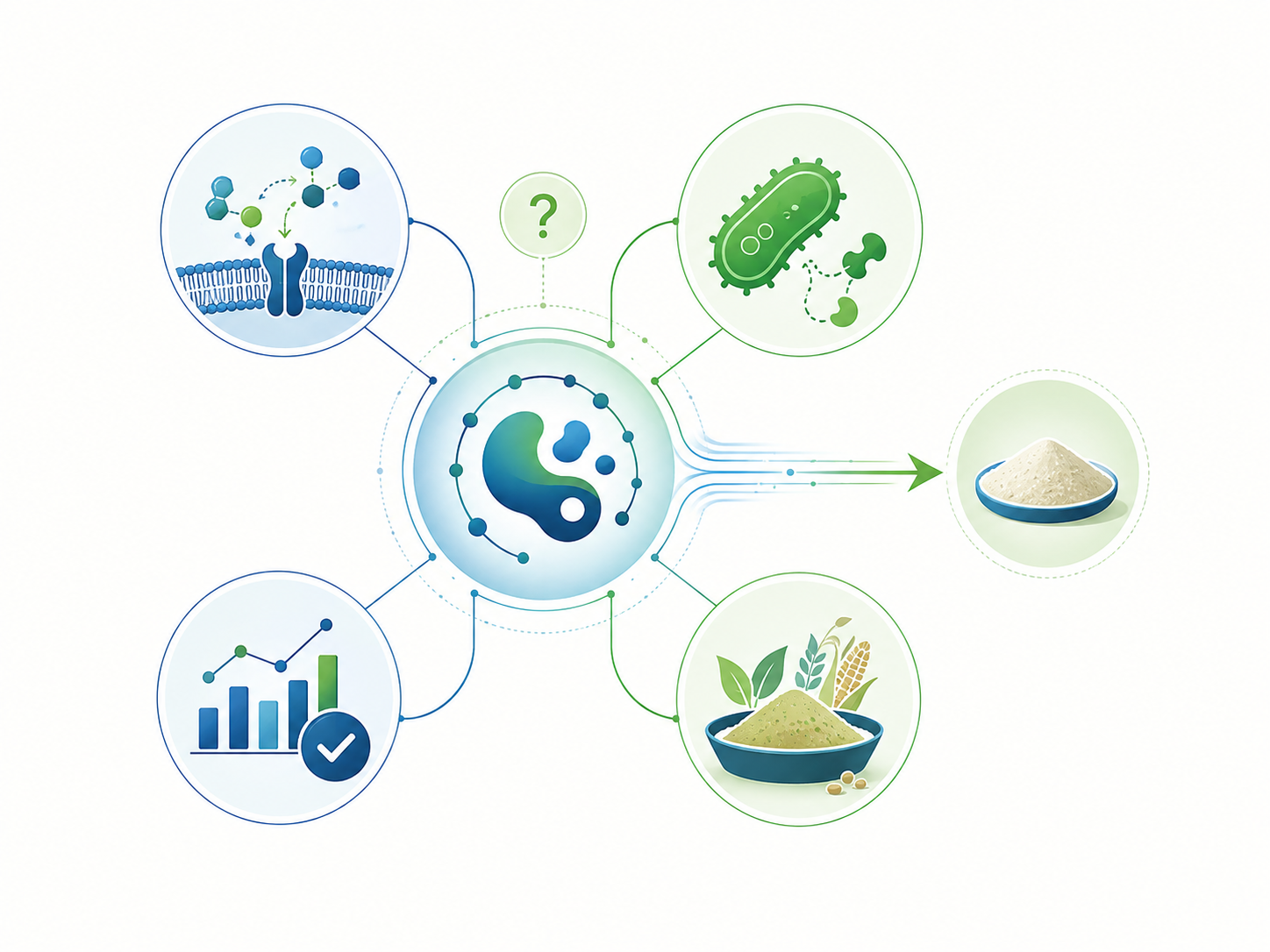
Identify microbial enzymes, structures or signals that influence nutrition, immunity, metabolism or microbial ecology.
Find and characterize microorganisms that naturally carry the mechanism of interest.
Adapt the biological concept to a species, production system, health context and nutritional objectives.
Connect formulation and delivery with requirements, decision tools or AI-supported prediction where relevant.
Programs advance through evidence-based stages. Each stage should reduce uncertainty and clarify whether the opportunity deserves the next investment.
Define the biological problem, intended use and strategic value.
Connect a mechanism, microbial source and translational rationale.
Select the model, endpoints, controls and decision criteria.
Test whether the mechanism produces a relevant biological effect.
Define what to invent, protect and position toward the application.
Align validation, resources, rights and the pathway toward application.
Co-Innovation works when scientific capability, application knowledge, resources and routes to value are assembled around the same question.
Each gate produces an interpretable decision—not simply another experiment.
Is the mechanism relevant and interesting?
Can a relevant biological effect be demonstrated?
Is the effect reproducible in the intended context?
Can the technology become producible, usable and scalable?
The collaboration framework should protect scientific exchange, future patentability and each party’s pre-existing assets.
Technical discussions take place under an appropriate confidentiality framework.
Avoid premature enabling disclosure and use controlled, defined scientific exchange.
Pre-existing technologies and know-how remain clearly identifiable.
Ownership, access, licensing and exploitation principles are agreed for results.
Together, we can determine whether it can become a differentiated technology for animal nutrition.